Golden Thread

Archie Donald
News
6 min read

When safety is managed through documents rather than systems, risk is understood only in hindsight.
Building safety is being overcomplicated – not because it’s inherently complex, but because too many organisations are managing documents instead of managing outcomes. Fire risk assessments, door surveys, external wall surveys, inspection records, certificates, maintenance logs and spreadsheets all exist somewhere – across emails, work orders and SharePoint. Each is produced for a valid reason - capturing one element of a building at a single moment in time. But these documents should be the sole output of effective safety management. They’re evidence of decisions made – not the input by which safety is understood.
Don’t treat buildings as documents – treat them as systems
Buildings, and fire safety in particular, are systems made up of interacting parts. Doors, alarms, dampers, risers and lifts sit alongside people, procedures and management decisions. Most of these elements depend on one another to remain effective. Without detection, smoke control cannot work properly. Without functioning fire doors, almost every other passive measure is undermined.
Each asset also has a lifecycle. It is specified, installed, inspected, repaired, adjusted and ultimately replaced. Different contractors and assessors interact with the same asset at different points, often using different tools and working to different standards.
Take a single fire door. It’s designed and tested to a specification. A contractor installs it. A year later, a surveyor inspects it as part of a door survey. A caretaker carries out routine checks. The handyman adjusts the closer. A specialist contractor later replaces the intumescent strips.
Each interaction generates a record. The installation certificate sits in one folder, the survey in another, the repair on a works order, the checks in an asset logbook. The information exists, but it’s spread so widely that the intelligence is lost.
If that door develops an issue tomorrow, how quickly can you see its history – what work has been done, when, and against what specification? Or do you have to search across folders, emails and reports to piece the story together? When intelligence is lost, risk is managed in isolation and without context – and this is where document-led safety starts to break down.
The Golden Thread – continuity, not storage
The Golden Thread is ultimately the responsibility of the building and its owner (the PAP/AP), not whichever managing agent happens to be in place. In practice, that means a living record of safety information: asset history, inspections, maintenance and decisions, connected in a way that can be understood and relied upon over time. This isn’t just a requirement of secondary legislation to the Building Safety Act; it’s also part of Regulation 38, which places obligations on both the Responsible Person (typically the managing agent) and the PAP/AP.
The Golden Thread has become a buzzword, overused and detached from its purpose. It is either treated as something impossibly complex or reduced to something so simplistic that it loses practical value. This is not a people problem. It is a systems problem.
If the Golden Thread is the information and data about building assets, along with the associated records, then it must be capable of being maintained, understood and transferred over time – with systems that work together to produce a coherent and trusted view of building safety information.
When safety information is managed through disconnected documents, that continuity breaks. Knowledge is lost between inboxes, shared drives and legacy platforms, particularly when managing agents change, contractors rotate or responsibilities shift.
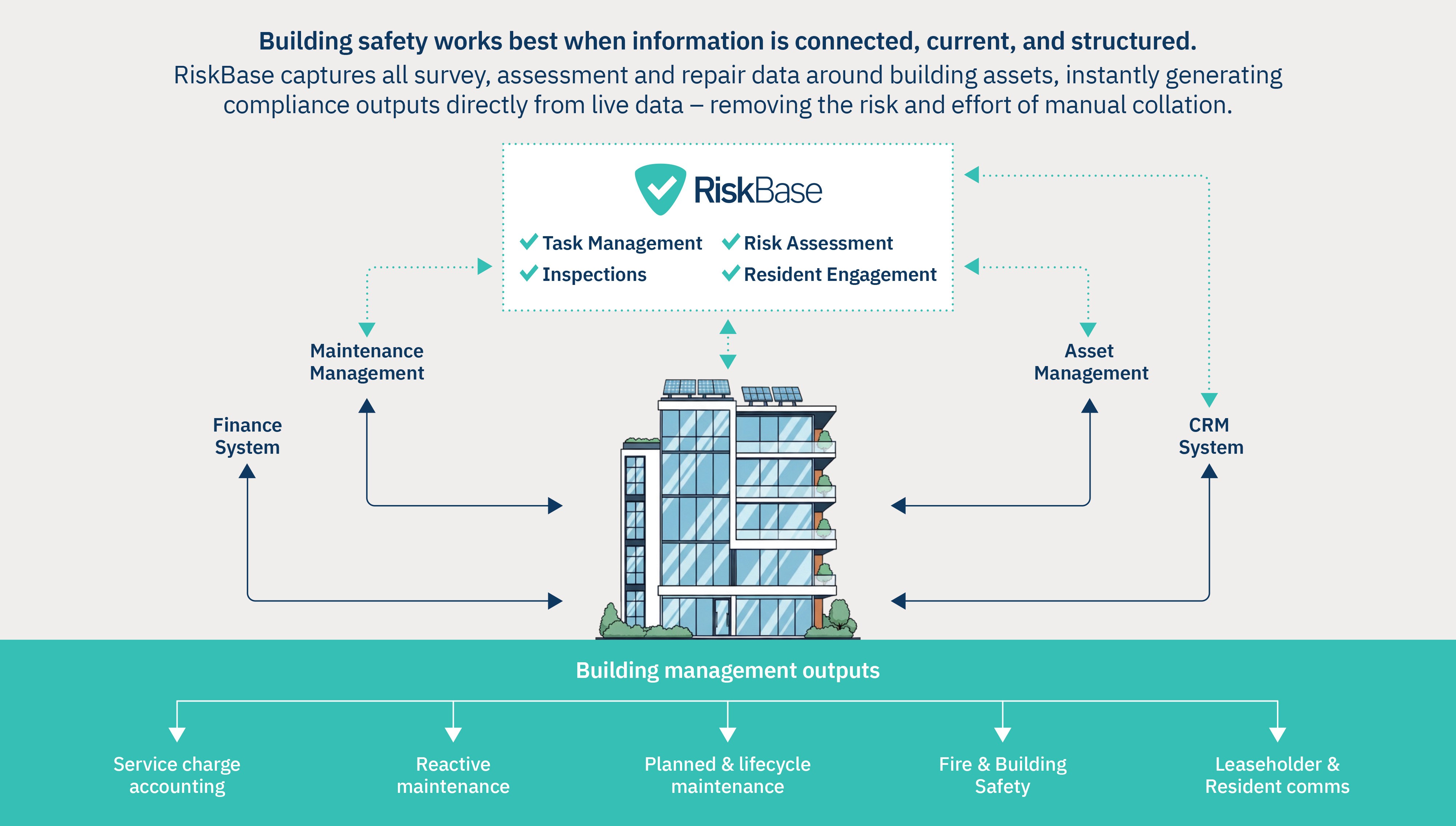
A similar misunderstanding exists around the idea of a “single source of truth”. This is often taken to mean one system that does everything. In reality, no single system can or should do that. What matters is having multiple connected systems, each doing their job, while contributing to a coherent and trusted view of building safety information.
A genuine Golden Thread depends on safety systems that can hold information consistently and share it where needed. Open integration is not a technical “nice to have”; it’s what allows safety knowledge to remain intact as buildings, contractors and managing agents change. With the right systems, structured data and open APIs allow safety information to flow between platforms rather than being re-entered or rebuilt later. At RiskBase, clients are already connecting live safety data with systems such as Dwellant and Simpro – turning fragmented records into practical, usable insight.
The Safety Case as a stress test
This is why the Safety Case has become such a pressure point. For many organisations, producing a Safety Case feels like a separate, high-effort exercise: information pulled together from multiple sources, inconsistencies reconciled, and understanding demonstrated after the fact.
But the Safety Case is not meant to be a one-off report. It is meant to evidence how a building is managed safely on an ongoing basis. When safety information is asset-based, connected and maintained as part of day-to-day management, the Safety Case stops being something assembled under pressure. It becomes a reflection of how well the building is already understood.
The shift we’re seeing in practice
This shift from document management to building management is already happening, and many in private block management risk getting left behind. At RiskBase, we have social housing clients with £multi-million ERP systems, still recognising the need for specialist software to manage assets and building safety – and those are the clients saving money, time and ultimately managing safer buildings.
It’s a two-way street. Many tech and software companies are still siloing their data behind closed systems. Those of us who have open APIs and are actually serious about using them are the systems finding success.
But in practice, the shift starts with a simple question: do you truly understand your buildings – or have you simply become very good at managing documents?
Find out how you can have a real, accessible Golden Thread of data.